Ecology
The site predominantly comprises modified grassland fields and arable farmland, which are of lower biodiversity value. The site is bound and dissected by higher value habitats comprising boundary vegetation including hedgerows, trees and scrub. Three ponds are located within the site, and a short section of watercourse is also present within the small woodland within the north-west.
The habitats across the site provide suitable foraging habitat for protected and notable species of birds, bats, terrestrial mammals, reptiles and amphibians. Common and widespread bat species have been recorded foraging within the site and along the internal and boundary hedgerows. Wherever possible, the proposed layout will retain those habitats of higher ecological value within the site which have been identified as key for foraging and dispersing species. Where habitats or species of interest may be impacted by the development, they will be mitigated and/or compensated for accordingly by the development with additional planting and habitat creation.
The outline planning application would be accompanied by an Ecological Appraisal.
Existing high value habitats will be retained wherever possible, which alongside new planting and the provision of extensive areas of the site as landscaped public open space, will seek to deliver biodiversity net gain.
Landscape
The proposals provide an opportunity to retain and integrate the existing landscape features within the site, including the stream, associated tree belts and hedgerows at field boundaries as part of the site layout. This will help to retain characteristic features of the locality and provide a strong landscape framework for the proposed development. The retention and reinforcement of the existing perimeter hedgerow will also help to contain views into the site and reduce the loss of the rural character of views experienced from the local area.
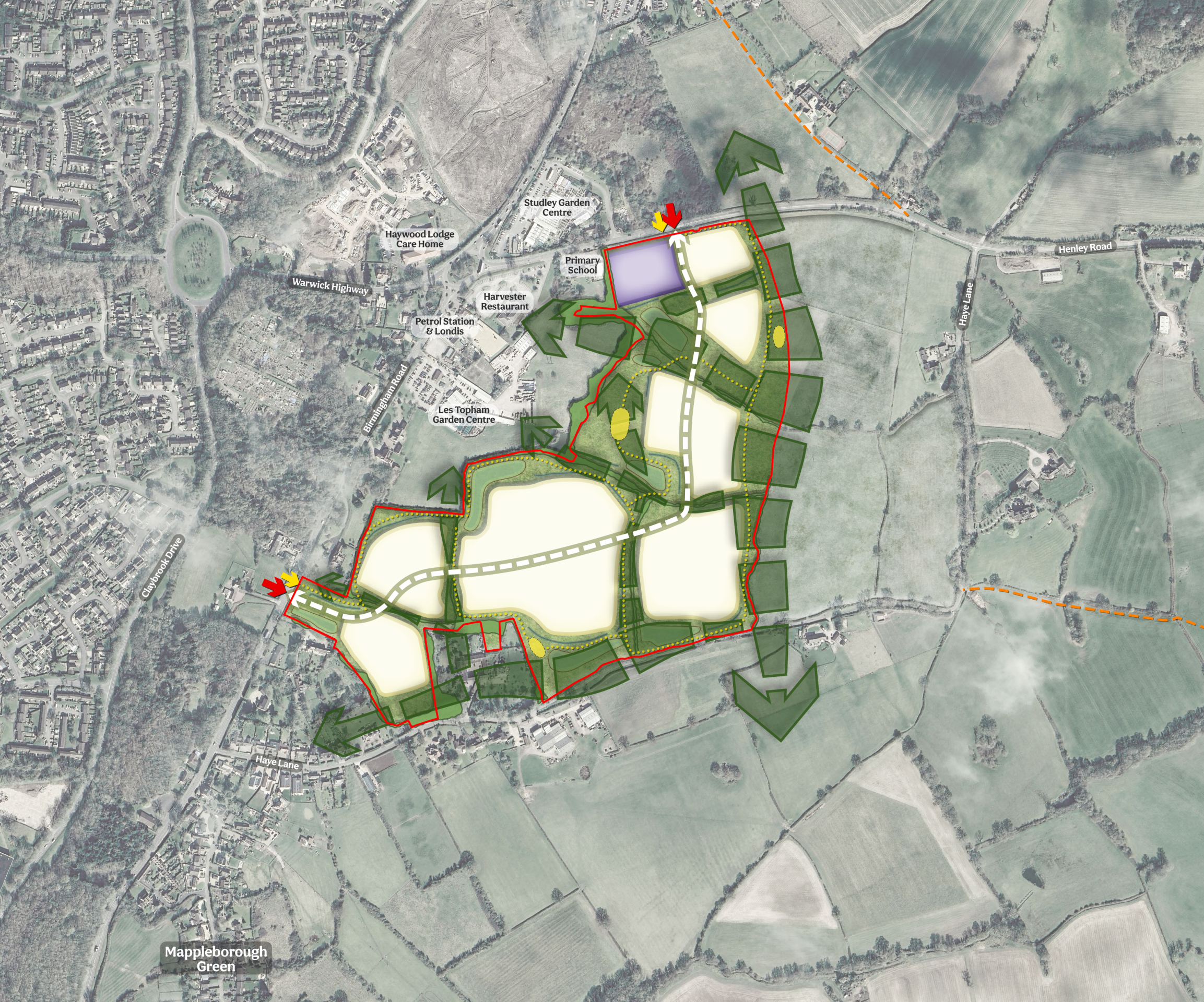
The concept layout is landscape-led, with the maximum retention of existing high value habitats to provide foraging corridors for wildlife. Green corridors permeating the development are indicated by the green arrows on this plan. Click to enlarge.
Building with Nature
Taylor Wimpey is proud to be a member of the Homes for Nature programme. This will see the installation of nesting bricks/boxes in every new home, hedgehog highways between gardens, and the installation of "bug hotels" in areas of public open space.
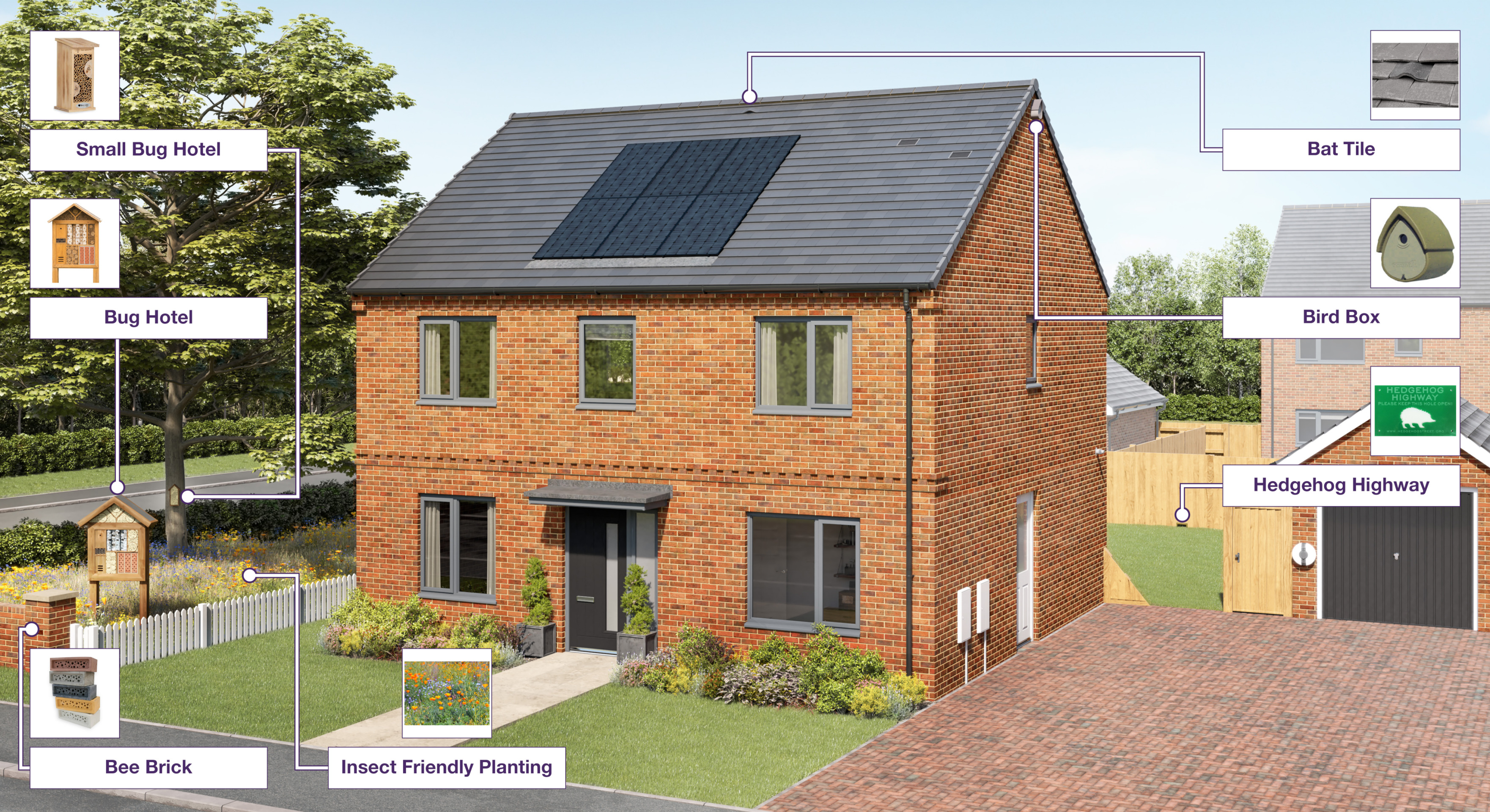
Nature interventions in a typical Taylor Wimpey home - click to enlarge